
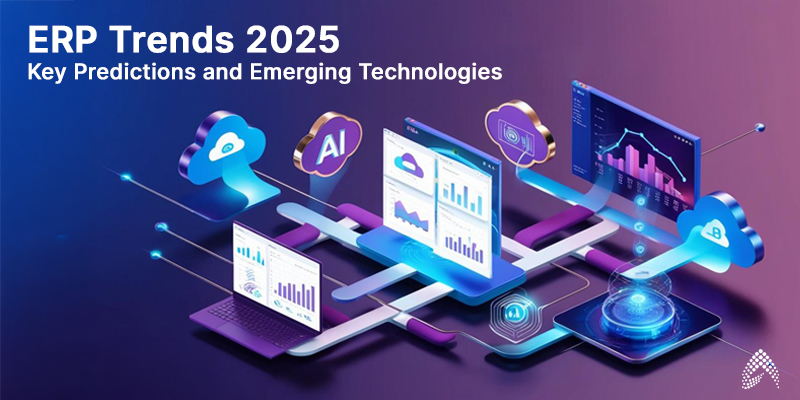
As the business world becomes more dynamic and data-driven, ERP (Enterprise Resource Planning) and IMS (Inventory Management System) solutions are evolving fast. 2025 sees several clear trends reshaping what companies expect from their systems. When you review or select your next ERP/IMS, these trends should guide your evaluation.
AI, Machine Learning & Hyper-Automation Are Standard
Modern ERP/IMS platforms increasingly embed artificial intelligence (AI) and machine learning (ML) directly into core workflows. This is not an optional add-on anymore — it is a feature businesses expect. Features such as predictive analytics, demand forecasting, intelligent inventory management, and automated decision workflows help companies stay agile.
Robotic Process Automation (RPA) and hyper-automation are also growing rapidly. Tasks like invoice processing, order entry, stock reconciliation, and reporting can be automated end-to-end — reducing manual errors and freeing staff for strategic work.
If you pick an ERP this year, ensure it includes AI/ML or can integrate them — your next system review should consider automation strength as a core evaluation parameter.
Cloud-Native & Modular Architecture for Flexibility
The shift from monolithic, on-premise ERP systems toward cloud-native, modular ones is accelerating. Cloud ERP offers scalability, remote accessibility, and lower upfront infrastructure costs — especially attractive for growing businesses or those with multiple locations.
A modular approach allows businesses to start with essential modules (inventory, purchasing, sales, finance) and add more as they scale — instead of being forced into large, complex systems from day one.
This flexibility means your next ERP can grow with you; during review cycles, evaluate how easily the system can adapt to new requirements without a full overhaul.
Real-Time Data, Analytics & Decision Support
In 2025, ERP/IMS’S solutions will be deeply integrating real-time analytics, business intelligence (BI) dashboards, and decision-support tools. Instead of periodic reports lagging days or weeks behind, systems now deliver instant insights: inventory status, supply-chain bottlenecks, sales trends, and cash-flow forecasts.
This trend empowers leaders to make agile, data-backed decisions — a necessity in fast-moving markets. When reviewing a system, check how robust and real-time its analytics capabilities are, and whether dashboards are customisable for your key metrics.
Industry-Specific & Compliance-Ready ERP Solutions
One size no longer fits all. ERP vendors are increasingly offering industry-specific solutions tailored for sectors like manufacturing, retail, logistics, and healthcare — with built-in workflows, inventory rules, and compliance features.
For regulated industries, especially, compliance, audit trails, data governance, and sector-specific workflows are critical. When reviewing ERP candidates, give preference to those supporting your industry’s regulatory and operational norms out of the box.
Mobility, Collaboration & Remote Work Support
Modern businesses operate globally, with teams distributed across offices, warehouses, or working remotely. ERP systems are responding: 2025 trends show a surge in mobile-friendly ERP UIs, remote access, approvals on the go, and seamless collaboration features.
If your workforce is distributed — or you plan to be — make sure your next ERP supports mobile access, responsive interfaces, and secure remote login — vital for efficiency and productivity.
Security, Compliance & ESG Awareness Built-In
With growing digital footprints, data security and regulatory compliance become non-negotiable. Modern ERP/IMS platforms increasingly embed advanced security: data encryption, access controls, compliance management, and audit logs — safeguarding sensitive financial, inventory, and customer data.
Moreover, there is a growing push toward sustainability and ESG (environmental, social, governance) reporting — some ERP tools now include modules to track environmental metrics, waste, energy use, or supply-chain sustainability data.
Conclusion
By aligning with these 2025 trends, businesses can future-proof their operations, remain agile, and harness technology to support growth efficiently — without sacrificing flexibility or compliance.